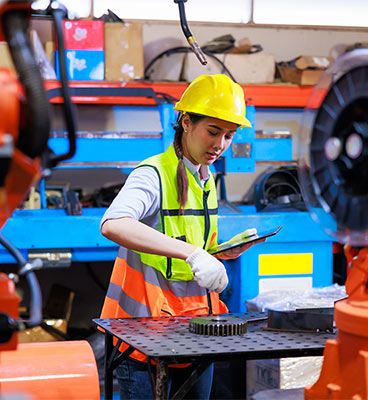
A well-equipped physics lab is the place where students stop reading about science and start doing it. From a primary school exploring magnets and pulleys to a university running spectrometer experiments, the quality of physics lab equipment directly shapes how confidently graduates carry their understanding forward. This guide explains how to choose the best physics lab equipment for schools, what to look for in a manufacturer, and how China's leading producers serve schools worldwide.
Whether you are setting up a new lab from scratch or upgrading existing apparatus, the principles below will help you build a physics lab that delivers genuine educational value — without overpaying or underspecifying.
Why China Leads in School Physics Lab Equipment
China's best physics lab equipment manufacturer producers have spent the last two decades building the deepest physics-equipment supply chain in the world. Optical components from Zhejiang province, electronic instruments from Guangdong, precision mechanical parts from Shanghai, and assembly facilities across multiple industrial zones — the result is that virtually every category of school physics lab equipment can be sourced under one roof.
For schools, this means a single trusted manufacturer of precision physics lab equipment for schools and universities can supply the complete physics curriculum: mechanics, optics, electricity, magnetism, heat, waves and modern physics. Lab equipment China's trusted manufacturer of precision physics lab equipment for schools and universities now produces ISO-certified tools across all these subdomains, in volumes and price points that European and American suppliers struggle to match.
What Makes the Best Physics Lab Equipment Manufacturer in China?
The label "best" is overused in marketing, so it helps to define it concretely. The best physics lab equipment manufacturer in China for your school is the one that combines five attributes:
1. ISO Certification and Quality Management
Look for ISO 9001 certification at minimum, ideally combined with ISO 14001 (environmental management) and CE marking for EU-bound equipment. ISO certification reflects documented production processes, traceability of components, and audit-ready quality control — not marketing claims. The most reliable producers display certificate numbers prominently and welcome verification through the issuing body.
2. In-House Optical and Electronic Manufacturing
Physics lab equipment depends heavily on optical components (lenses, prisms, mirrors) and electronic instruments (galvanometers, multimeters, oscilloscopes). The most capable manufacturers produce these in-house rather than reselling third-party components. In-house production gives them control over alignment accuracy, coating quality, and electronic calibration — the differences that separate a usable instrument from a frustrating one.
3. Range Across the Physics Curriculum
The best physics lab equipment manufacturer offers products across all major curriculum domains: mechanics, optics, electricity, magnetism, heat, wave motion, modern physics. A supplier strong in only one area cannot supply a complete physics lab efficiently. Range matters because it means single-source procurement, single-source warranty, and single-source spare parts for a decade or more.
4. Educational Lab Manuals
Physics apparatus without a structured lab manual is half-useless to students and instructors. The leading manufacturers ship printed and digital lab manuals covering the underlying theory, equipment description, safety procedures, step-by-step experiment procedures, sample data sheets, expected results and discussion questions for each apparatus.
5. Long-Term Spare Parts Commitment
Physics lab equipment is a 10 to 15 year asset. The lenses get scratched, the electronic meters get blown up, the bearings wear, the rubber tubing perishes. A manufacturer who commits to spare parts availability for 10 years — and can prove it through current customer service of their oldest products — is the right partner.
Physics Lab Equipment by School Level
The right specification depends on the age of students and the curriculum depth. Below are equipment recommendations by school level.
Primary School Physics (Ages 6 to 11)
For primary schools, physics is largely about exploration and concept introduction. The leading primary school lab equipments manufacturers China offer kits that emphasise robustness, safety and visual impact over precision.
- Magnet exploration sets (bar, ring, horseshoe magnets with iron filings)
- Simple machine kits (pulleys, levers, inclined planes)
- Friction and motion exploration trolleys
- Bouncing ball energy demonstration kits
- Simple optics kits (mirrors, prisms, ray boxes)
- Basic electricity kits (low-voltage batteries, bulbs, switches)
- Wave motion demonstration toys (slinky, water wave tanks)
- Sound exploration kits (tuning forks, simple drums)
Secondary School Physics (Ages 11 to 16)
Secondary school physics requires more rigorous apparatus capable of quantitative experiments alongside qualitative demonstrations.
- Optical bench with full lens and mirror sets
- Full mechanics apparatus (Atwood's machine, pulleys, friction sets)
- Spring sets for Hooke's law experiments
- Calorimetry apparatus and thermometers
- Resistance boxes and rheostats
- Galvanometers, ammeters and voltmeters
- Wheatstone bridge sets
- Magnet and electromagnet kits
- Ripple tank with full accessories
- Resonance tubes and sonometers
- Ray box kits with prism sets
Senior Secondary Physics (Ages 16 to 18)
Senior secondary requires advanced apparatus capable of supporting board examination practical and competitive examination preparation.
- Newton's rings apparatus
- Spectrometers (student grade)
- Polarimeters
- Photoelectric effect apparatus
- Plank's constant determination kits
- Semiconductor diode and transistor characteristic kits
- Cathode ray tube demonstration apparatus
- Diffraction grating sets
- Potentiometer apparatus (10-wire)
- Magnetic field measurement apparatus
University & College Physics
University-level physics labs add research-grade equipment and advanced experimental setups.
- Michelson interferometer
- Hall effect apparatus
- Magnetic susceptibility apparatus
- Black body radiation apparatus
- Zener diode and full electronics characterisation kits
- Logic gate trainers and digital electronics kits
- Microwave optics setups
- Stefan-Boltzmann apparatus
- Gauss meters and magnetic field apparatus
- Kerr cell and Pockels cell setups (advanced research)
Quality Specifications to Insist On
When evaluating physics lab equipment quotations, insist on specific quality details rather than vague claims. Generic "high quality" or "international standard" is not a specification.
For Optical Equipment
- Lens material and coating type (anti-reflective, scratch-resistant)
- Surface accuracy (e.g. lambda/4 or better)
- Centration tolerance
- Mounting precision and adjustability
For Electrical Instruments
- Accuracy class (1.5%, 1.0%, 0.5%, 0.2%)
- Calibration certificate provision
- Range and overload protection
- Type of movement (taut-band, jewelled bearing)
For Mechanical Apparatus
- Material (stainless steel, brass, aluminium alloy)
- Surface treatment (chrome plating, anodising)
- Bearing type and rated load
- Dimensional tolerance
How Much Should School Physics Lab Equipment Cost?
For a primary school physics corner, expect to spend USD 800 to 2,500 for a complete set covering magnets, simple machines, basic optics and electricity. A secondary school physics lab serving 30 students typically requires USD 5,000 to 12,000 in equipment ex-factory in China. A senior secondary lab supporting board examinations runs USD 8,000 to 18,000. A university physics lab with research-capable apparatus can range from USD 25,000 to 80,000 depending on scope.
Add 25 to 35 percent for landed cost (shipping, duties, inland transport) to arrive at a complete budget figure.
Common Physics Lab Procurement Mistakes
- Buying lab apparatus that nobody can use: physics labs sometimes acquire advanced equipment that the curriculum doesn't actually require. Match purchases to syllabus, not aspiration.
- Skimping on optical bench quality: a wobbly bench ruins every optics experiment for ten years. Pay for stiffness and precision here.
- Ignoring power supply compatibility: Chinese suppliers default to 220V; verify before ordering for 110V markets.
- Forgetting calibration: electrical instruments need calibration certificates and periodic recalibration to retain teaching credibility.
- Buying once and forgetting: physics labs need annual maintenance budgets for replacement bulbs, broken thermometers, blown fuses and worn pulleys.
The Importance of Trainer Support
Brand-new equipment in the hands of an under-prepared instructor is wasted. The best physics lab equipment manufacturer in China supports new lab installations with structured trainer-of-trainers programmes — on-site demonstrations of every apparatus, troubleshooting walkthroughs, and lab manual delivery. Insist on this for any complete-lab order.
"A physics lab where students struggle with apparatus they don't trust is worse than a smaller lab where every instrument works perfectly. Reliability is the foundation of teaching credibility."
School Physics Lab Equipment Manufacturers Worth Considering
Among the genuine producers, look for manufacturers who offer the complete physics curriculum range, hold ISO 9001 and CE certifications, ship Physics Lab Equipments that are widely used in schools, colleges and universities throughout the world, and have demonstrable track records over 15 to 20 years. The leading school lab equipment manufacturer in China producers in this category typically work directly with schools, education ministries and tender consortiums, not just consumer wholesale channels.
Liquid International is one such manufacturer. We produce school physics lab equipment, educational laboratory microscopes, biology lab equipments and complete school science lab packages from our own facilities in China, with shipments to over 65 countries. Our physics range covers every domain in the school and university curriculum, with ISO-certified tools, structured lab manuals and 10-year spare parts commitment.
Conclusion
The best physics lab equipment for your school is the equipment that fits your curriculum, your students' age, your budget and your spare-parts horizon. The best physics lab equipment manufacturer in China is the one that can verify in-house production, ISO certification, comprehensive range, lab manual support and long-term parts availability. Get those two right and the lab you build will outlast multiple curriculum reforms.
If you'd like a structured proposal against your physics curriculum requirements, the Liquid International team is ready to help — with detailed specifications, pricing, shipping and reference customers in your region.
Planning a school physics lab project?
Send us your curriculum and student headcount — we'll return a complete physics lab proposal with itemised pricing, lead time and shipping estimate within 24 hours. ISO-certified, manufactured in China, supplied to 65+ countries.
Get a Physics Lab Proposal